
November 10, 2026
By John Jakovlic
Navigating the 20% Price Hike: How IT Buyback Revenue Unlocks Upgrades in a Tight Market
According to recent industry data from Counterpoint Research reported by Computerworld, global smartphone sales dropped by 20% in Q3—hitting their lowest third-quarter level since 2012. The culprit? Global component shortages in DRAM and NAND memory, which pushed manufacturing costs higher and forced end-user hardware pricing up by roughly 20% across the board.
With analysts predicting no near-term price relief IT leaders and enterprise procurement teams face a tough dilemma: freeze hardware refreshes and absorb productivity hits, or stretch budgets thin to pay premium upgrade costs. Fortunately, there is a third option - leveraging trapped equity in legacy fleets through strategic IT buyback programs to fund new deployments.
The Real Cost of Holding Devices Too Long
When hardware acquisition costs surge, the instinctive reaction is to extend lifecycle replacement schedules from 24 or 36 months to 48 months or more. However, delaying upgrades introduces hidden operational expenses that quietly offset any temporary budget savings
Increased Maintenance & IT Overhead: Aging devices experience higher failure rates, software incompatibilities, and security patch limitations
Declining Battery Health & Secondary Market Tiers: Lithium-ion batteries naturally degrade over cycles and time. In secondary markets and buyback valuations, battery health is a crucial factor. Once a device's maximum battery capacity degrades past key threshold tiers, processing centers must factor in component refurbishment and replacement expenses. Consequently, units with degraded batteries see a steep reduction in trade-in yield compared to well-timed retirements
Accelerated Depreciation: Secondary market values decline rapidly with every passing quarter. Holding onto retired hardware for "someday" guarantees a lower return when liquidated
Conducting a Fleet Audit: Uncovering Stored Asset Risks
A comprehensive inventory audit is the first step toward reclaiming device equity. However, many enterprise organizations fall into a common storage trap that converts valuable assets into total losses.
- Critical Storage Risk: Non-Climate Controlled Inventories
It is widespread practice to pack or leave decommissioned devices in their original retail packaging and store them in backroom facilities, off-site storage units, or non-climate-controlled warehouses while waiting for disposal or future deployment. While these devices may look pristine or even "new in box," extreme temperature fluctuations and prolonged deep discharge cause lithium-ion batteries to chemically decompose and off-gas.
To maximize asset recovery and prevent inventory degradation, IT teams should follow a structured auditing routine:
Inventory & Categorization: Log all active, idle, and decommissioned assets by make, model, age, and physical condition
Environment Verification: Inspect current device storage locations immediately. Move all stored hardware into temperature-regulated environments to prevent thermal expansion and battery swelling
Battery & Functional Diagnostics: Assess device health and identify units approaching lower performance thresholds before valuation tiers drop further
Timely Valuation: Submit fleet specifications for professional buyback appraisal before market depreciation and battery degradation erode secondary value
Comparing Upgrade Financial Strategies
By comparing traditional replacement methods against an active buyback strategy, organizations can offset current component price hikes and keep hardware modern.
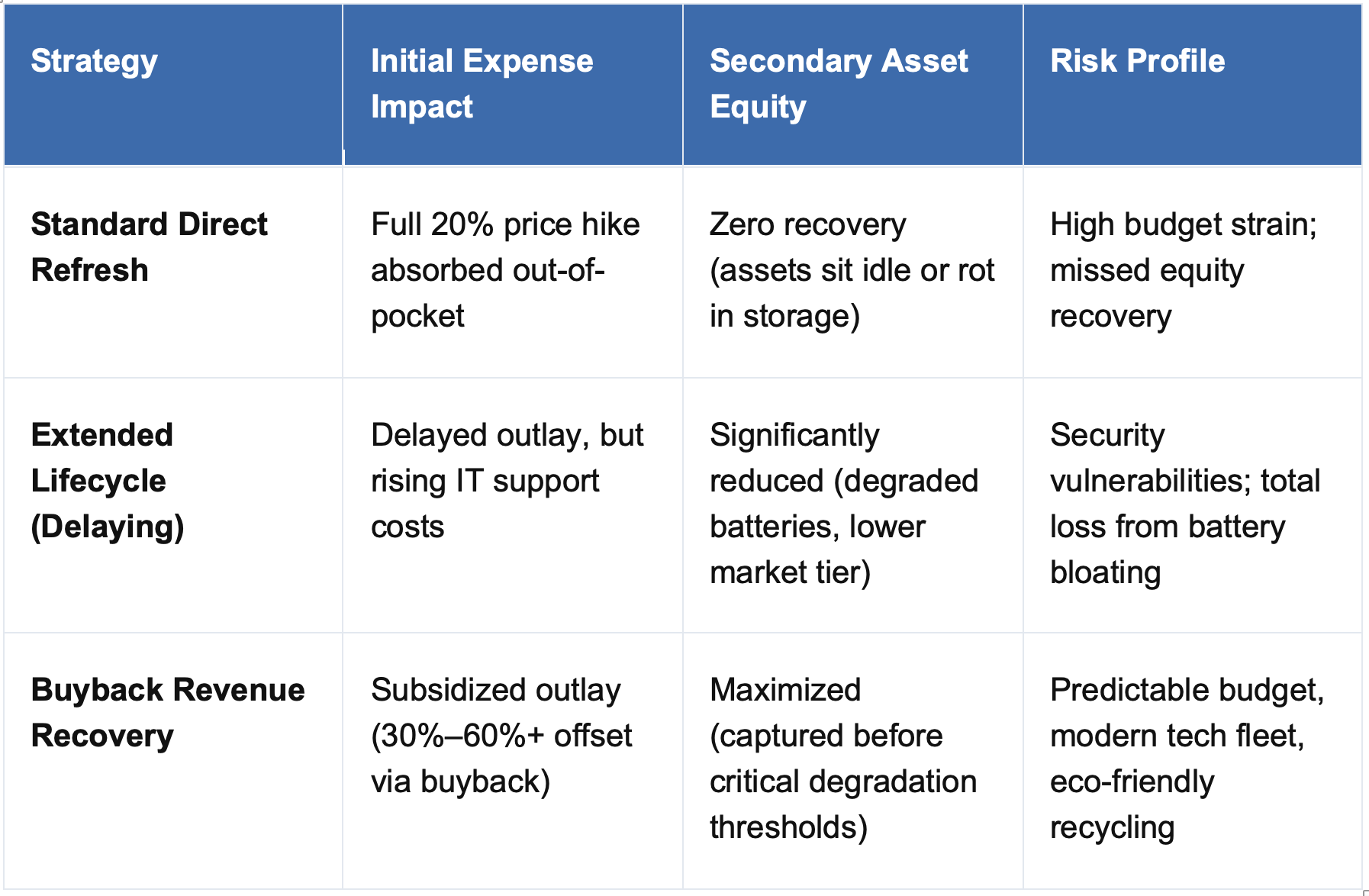
Comparing Upgrade Financial Strategies
Rising memory component costs do not have to freeze your technology roadmap. By auditing your active and stored fleets, removing storage hazards, and timing liquidations before battery degradation hits lower valuation brackets, you can convert dormant mobile assets into working capital for your next upgrade cycle.
Ready to see what your existing fleet is worth?
Contact e-Cycle today for a free, low-touch fleet valuation to calculate your estimated buyback revenue.
NOTE: We use cookies on this website. If you continue to access our website, we'll assume that you consent to receiving cookies in accordance with our Privacy Policy.
©2026— e-Cycle. All rights reserved.
Designated trademarks and brands are the property of their respective owners. e-Cycle is not affiliated with the manufacturers of the items available for cash buyback.